
Moving Beyond the Myth of "Cysts": Why the Shift from PCOS to PMOS Changes Everything
One of the most common diagnoses we see at the Tennessee Center for Reproductive Acupuncture has been PCOS (Polycystic Ovary Syndrome). It is the leading underlying cause of infertility, affecting 1 in 8 women—or over 170 million individuals globally.
Yet, anyone who has lived with this condition knows the name has always been a poor fit. It implies that the root of the problem is a collection of pathological ovarian cysts, completely obscuring the complex, multi-system nature of the disorder.
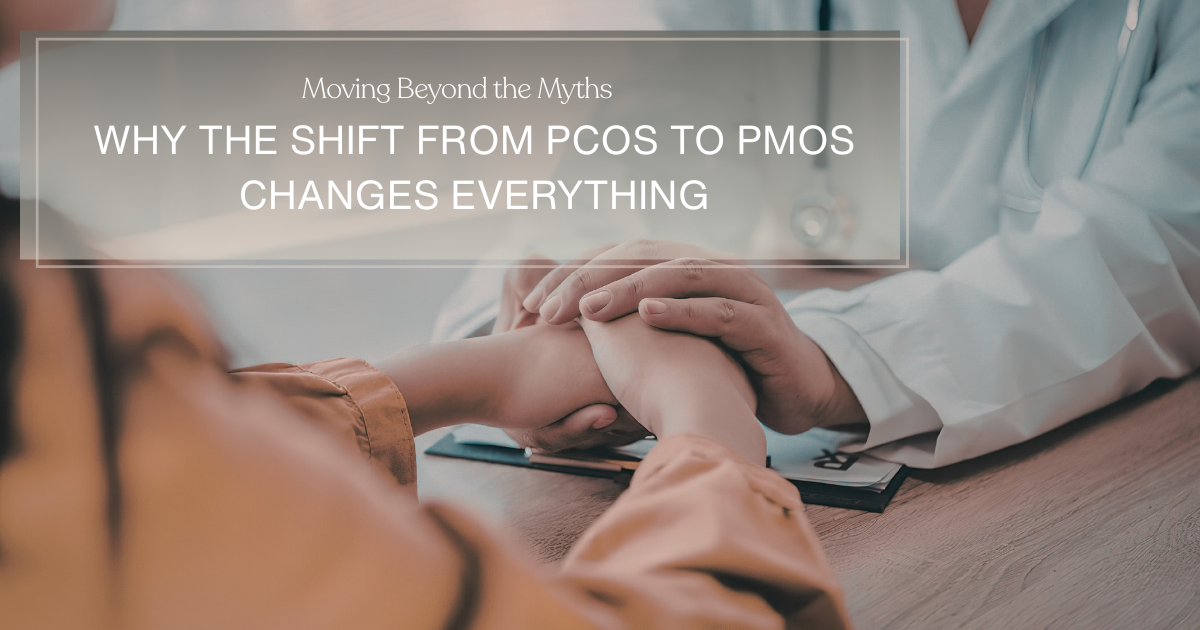
That is why we are thrilled to share a massive, historic shift in women's health. A global consensus of 56 leading academic, clinical, and patient organizations recently announced an official name change published in The Lancet: PCOS is now PMOS, which stands for Polyendocrine Metabolic Ovarian Syndrome. This isn't just a administrative tweak; it is a fundamental reframing of how medicine understands, diagnoses, and treats millions of people.
The Problem with the Old Way: What We See in Our Clinic
We see women walk through our doors every single week who were diagnosed with PCOS as teenagers, handed a prescription for birth control, and sent on their way.
Too often, they received no testing for insulin resistance, no education on the broader metabolic risks, and zero guidance on how the condition might impact their future fertility or mental health. The conventional medical focus has long been narrowed down to a single goal: forcing a regular cycle via synthetic hormones, while completely missing the vital, interconnected pieces of the puzzle.
By removing the misleading focus on "cysts" and replacing it with Polyendocrine Metabolic Ovarian Syndrome (PMOS), the medical community is finally acknowledging what we have championed for years: this is a whole-body endocrine and metabolic condition, not just an isolated ovarian issue.
How is PMOS Diagnosed Now?
The updated framework ensures that individuals can get an accurate diagnosis even in the absolute absence of physical cysts. For adults (aged 20+), a diagnosis of PMOS is made based on meeting at least two of the following International Guideline criteria:
Oligo-anovulation: Irregular, infrequent, or absent menstrual cycles.
Hyperandrogenism: High levels of male hormones (androgens), either observed clinically (severe acne, hair loss, or hirsutism/excess body hair) or measured through biochemical blood work.
Ovarian Dysfunction: Polycystic appearance on an ultrasound or elevated Anti-Müllerian Hormone (AMH) levels.
The Full Impact of PMOS: Physical, Metabolic, and Mental Health
PMOS is a multisystem condition. Reframing the name highlights the interplay between metabolic dysfunction and hormonal imbalance.
The Physical & Metabolic Markers
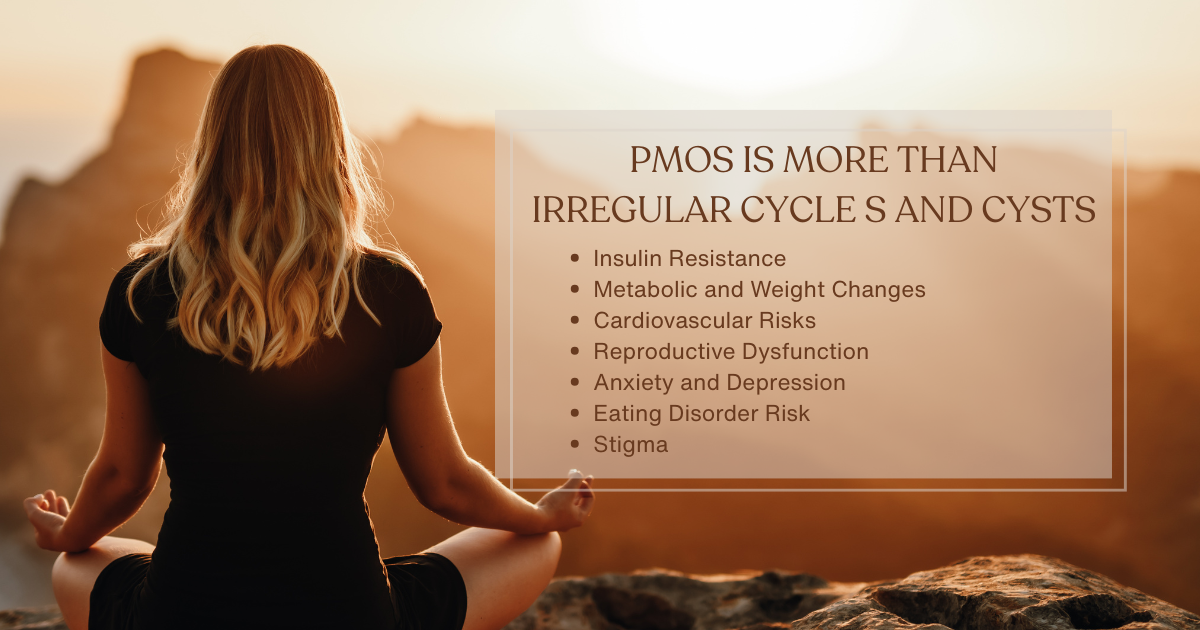
Insulin Resistance: Affects up to 85% of individuals with PMOS (including 75% of lean individuals with a BMI ≤ 25 kg/m²). This compensatory hyperinsulinemia drives the ovaries to secrete excess androgens, creating a vicious cycle.
Weight & Metabolic Challenges: Metabolic changes are a core feature of PMOS, which can influence body composition and overall health. PMOS is associated with a higher likelihood of metabolic conditions such as type 2 diabetes, dyslipidemia (cholesterol imbalances), fatty liver disease, and hypertension, regardless of an individual's weight or BMI.
Cardiovascular Risks: Emerging data shows that even premenopausal individuals with PMOS face significantly higher odds ratios for composite cardiovascular disease (1.68) and stroke (1.71) compared to those without the condition.
The Mental Health Toll & Weight Stigma
Perhaps the most neglected aspect of the old "PCOS" umbrella was mental health. The Lancet publication emphasizes that psychological features are deeply tied to the condition:
Anxiety and Depression: The constant hormonal fluctuations, combined with physical symptoms, create a severe psychological burden.
Eating Disorders: The complex relationship between insulin resistance and weight stigma leads to a drastically higher prevalence of eating disorders among PMOS patients.
The Weight Stigma: Society—and unfortunately, many doctors—often treat weight gain as a simple failure of willpower. In reality, PMOS chemically alters how your body processes and stores energy. This unfair stigma causes massive distress, delays accurate diagnosis (leaving up to 70% of individuals undiagnosed), and causes many to experience deep dissatisfaction with their medical care.
How Chinese Medicine and Acupuncture Address PMOS
While Western medicine is just now updating its terminology to see the "whole picture," Traditional Chinese Medicine (TCM) has spent thousands of years looking at health exactly this way. We never treat an isolated organ; we treat the entire pattern of symptoms presented by the individual.
In our clinic, we recognize that your mental health, your metabolic health, and your fertility are inseparable. When you come to the Tennessee Center for Reproductive Acupuncture in Knoxville, TN, we look at the less well-known symptoms—like sleep disturbances, chronic fatigue, anxiety, and digestive changes—as vital parts to your underlying pattern.
The Science of Acupuncture for PMOS
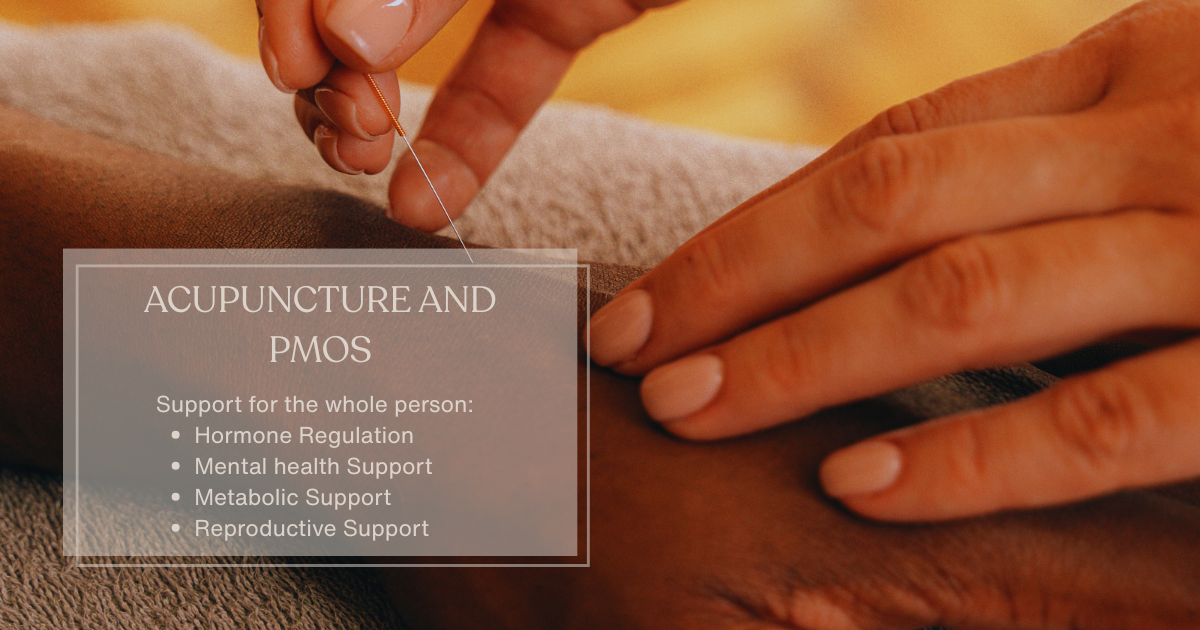
Modern clinical research consistently demonstrates that acupuncture excels at treating the exact pillars defining PMOS:
Hormone Regulation: Acupuncture helps regulate the hypothalamic-pituitary-ovarian (HPO) axis to reduce high luteinizing hormone (LH) and lead to higher rates of ovulatory cycles.
Lowering Androgens: Treatment helps naturally lower high testosterone and other androgens, reducing acne and unwanted hair growth.
Improving Insulin Sensitivity: Acupuncture works to improve how your cells respond to insulin, stabilizing blood sugar and aiding metabolic health.
Optimizing Your Fertility Journey
Whether you are trying to conceive naturally or are navigating assisted reproductive technology, acupuncture is a powerful ally. We regularly utilize tailored acupuncture protocols, specialized supplements, and traditional herbs to optimize hormone levels and improve pelvic blood flow. This comprehensive approach supports:
Natural, ovulatory cycles
Medicated ovulation induction cycles (like Letrozole or Clomid)
Intrauterine Insemination (IUI)
In Vitro Fertilization (IVF) cycles to improve egg quality and uterine lining receptivity.
Where Do We Go From Here?
The shift to PMOS marks a turning point. Our hope for the future is a drastic reduction in misdiagnoses and a complete dismantling of the fragmented care that has plagued women for decades. By broadening the medical perspective beyond a narrow focus on fertility or weight, patients can get the comprehensive, life-long metabolic and mental health support they deserve.
You do not have to wait for the standard 3-year global medical transition period to start treating your body as a complete, interconnected system.
Take Control of Your Health
If you are ready to address your PMOS symptoms with a holistic, root-cause approach that balances your hormones, supports your metabolism, and prioritizes your mental well-being, we are here to partner with you.
Ready to get started?Book your initial consultation online today or give us a call at865-315-3845 to learn how reproductive acupuncture can support your health journey.
https://www.thelancet.com/journals/lancet/article/PIIS0140-6736(26)00717-8/fulltext
https://www.mayoclinic.org/diseases-conditions/pcos/diagnosis-treatment/drc-20353443